Pages

Showing posts with label Elizabeth II. Show all posts

Sunday, 10 May 2020

Sunday Stamps - Mother and Children; Great Britain

The Queen addressed the nation at 9 pm on the 75th anniversary of VE last Friday at exactly the same time that her father (George VI) on VE Day in 1945.

It seemed appropriate for me to show these stamps today.


  • Princess Elizabeth with her father, George VI, 1930
  • Elizabeth II State Opening of Parliament 2012
  • The Queen with Prince Charles and Princess Anne 1952
These stamps were issued on 21 April 2016.

For more mothers and children just visit Sunday Stamps - mum.

Wednesday, 13 June 2012

There's Many A Slip - Sepia Saturday

This week’s photo from The State Library of New South Wales  features a couple embracing whilst a cat escapes from between their legs. The man is in uniform and they are either saying ‘goodbye’ or ‘hello’. The cat is bored by all the spooning going on.


This reminded me of the man who said to a lady he did not know, "Excuse me, Madame. Your slip is showing.


Annoyed, she retorted, "Don't look now but so is your father's."


All sorts of slip exist. It's a fielding position in cricket,  a tie, a place where ships are launched and even:


A slip of the tongue

Which leads me to William Archibald Spooner

Caricature of William Archibald Spooner - 1898
By Leslie Ward - published in Vanity Fair
Spooner became famous for so-called spoonerisms or play on words where constonants, vowels and parts of words are mixed.

And example appropriate to our prompt picture might be, "It is kisstomary to cuss the bride."

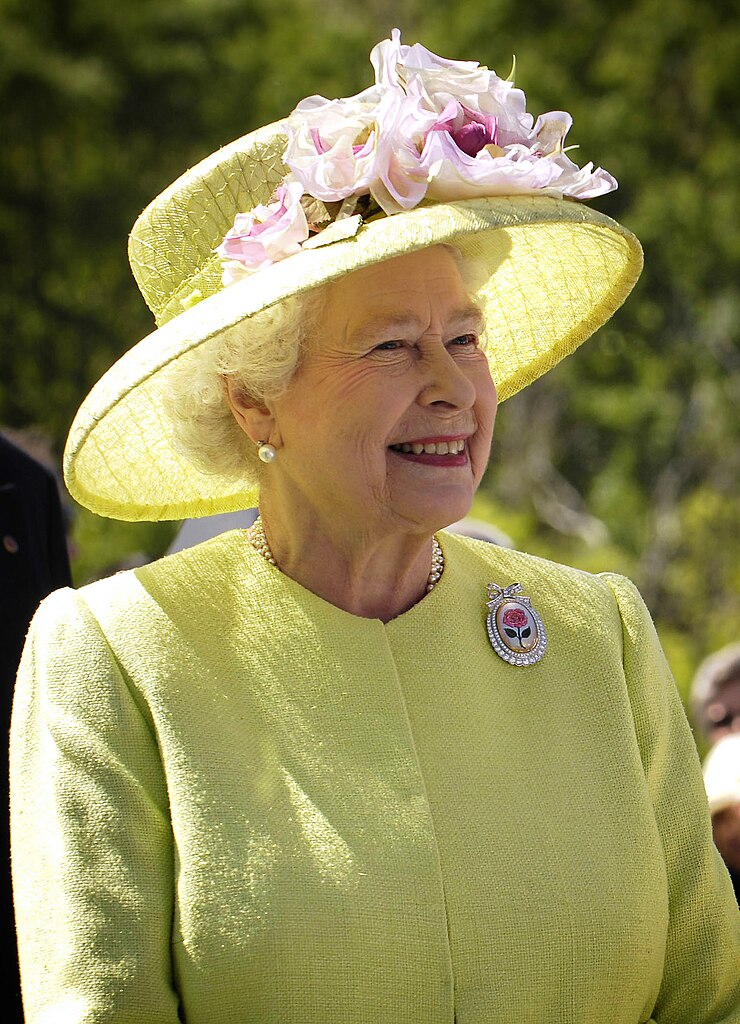
This Diamond Jubilee Year of our Queen

Queen Elizabeth II - 2007
(NASA/Bill Ingalls)
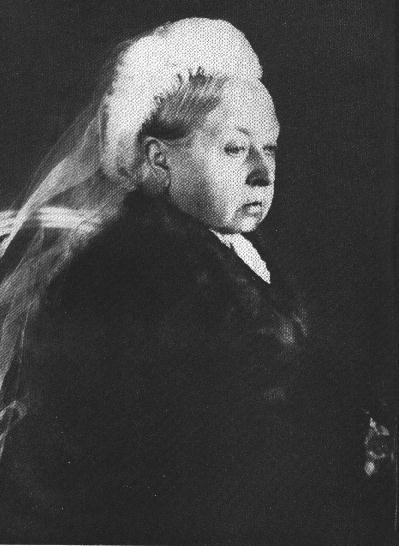
Spooner could have said, "Let's glaze our arses to the queer old Dean" but actually he is reputed to have said this alluding to our other "Diamond" Lady.

Queen Victoria - c1900
(One of her last photos from 'Victoria Images of her World)
It's a common occurrence for a language to be misused either by accident or deliberately. The term malapropism comes from Richard Brinsley Sheridan's play The Rivals and in particular the character Mrs Malaprop who frequently misspoke words to comic effect. (Malapropos is and adlective/adverb meaning  inappropriate/inappropriately) derived from the French mal à propos (literally "ill-suited").

Comedians and stars in films and on television have made use of malopropism's and not to leave the cat in our picture out in the cold there's this from Stan Laurel in the Laurel and Hardy film "Any Old Port".

"What a terrible cat's after me."

To avoid further linguistic disasters I suggest you take a look at other interpretations of our lovers at Sepia Saturday-130


Sunday, 11 March 2012

Famous Women - Sunday Stamps

My collection seems to be short on stamps to meet this week's theme especially if you exclude Heads of State and France's Marianne. However I discovered one or two which I had to find out about first.

Sigrid Undset 1882-1949
Sigrid was born in Denmark but moved to Norway when she was two. Her claim to fame is that she was awarded the Nobel Prize for Literature in 1928. Her most famous book is probably Kristin Lavransdatter a trilogy about life in Scandinavia in the Middle Ages. You can read about her on the Nobel Prize site - "Sigrid Undset - Autobiography".

My second stamp comes from Mexico.

Josefa Ortiz
Josefa Ortiz De Dominguez was the heroine of the Mexican Independence. One of her most important contributions to the Independence movement was when she alerted Father Miguel Hidalgo that the conspiracy had been discovered by the Spanish.You can read more about her here 

This is the year of the Diamond Jubilee of Queen Elizabeth II. I do not have any of the stamps issued to commemorate the event. I can however show some issued for her 60th birthday.

Queen Elizabeth II
 To see other famous women you should switch over to Viridian's Sunday Stamps 61

Sunday, 22 January 2012

Great Britain - Sunday Stamps

The use of postage stamps started in Great Britain with the famous Penny Black in 1840.

Penny Black (reproduction)
As the stamps were only for internal use the country's name was not included on the stamps; later it was agreed internationally that British stamps did not need the name but all should contain the sovereign's head. In fact there has only been one stamp that has included the name Britain - the stamp commemorating the Festival of Britain in 1951.
Use of the Penny Black was discontinued when it was replaced due to the black colour not showing postmarks clearly. The Penny Red took its place.

I have only one stamp showing Queen Victoria who reigned from 1837-1901 and I have shown this before.
Queen Victoria 1851
There is another stamp of the same value and colour as this. The difference between lies in the design; the stamp I've shown has 16 dots around each corner, the other only 14.

After Victoria Great Britain had four Kings as shown on these stamps from my collection.
Edward VII (1901-1910)
I've shown a reproduction here as my Edward VII stamps are so heavily postmarked.

George V (1910-1936)
Edward VIII (1936)
These are the only four stamps issued for Edward VII before his abdication.

George VI (1936-1952)
These early stamps from George VI's reign include the commemorative for his coronation.

Our present Queen came to the throne in 1952 and is to celebrate her Diamond Jubilee this year.

Elizabeth II
The first stamps issued became known as the Wilding issues as they were based on a portrait of Queen Elizabeth II by photographer Dorothy Wilding. Variations on this theme were used until 1967, when the Machin issues were introduced. The Machin design is a profile of the queen on a solid back ground.

Machin issue
In 1971 the currency was decimalised so the stamps changed again for the new values.

Decimal currency
 To save stamps from Great Britain you have always needed to recognise different water marks. In addition technical improvements in printing mean you also need to be able to identify graphite lines on the back of the stamp, phosphor bands (all over, single or double), position and design of the demonination value.There are literally hundreds of varieties.


With the advent of first and second class postage rates the demonination has been removed and in my opinion the design has been ruined by unsightly postage class numbering.

First and Second Class Postage.
 As you can see there is also a different stamp and charge for large envelopes. Postage rates have gone up by over 4000% since Queen Victoria''s days. She would not have been amused.

To amuse yourself further you should view other stamps at Viridian's Sunday Stamps