Pages

Showing posts with label Scunthorpe. Show all posts

Monday, 17 April 2017

A-Z Challenge 2017 - Houses, some real, some not - N

N - Normanby Hall

This is a house that provides a link, for me, with Lincolnshire hockey, a steelworks, Buckingham Palace and a Prime Minister's wife.

In 1960 I started work at Richard Thomas & Baldwins Redbourn Works in Scunthorpe, Lincolnshire; other works in the town were run by Appleby Frodingham and Lysaghts. The Lysaghts plant was called the Normanby Park steelworks.

I played hockey for Redbourn against App-Frod and the team from Normanby Park whose pitch was located in the estate surrounding Normanby Hall.


Normanby Hall
(12 August 2006 - by E Asterion u talking to me - CC BY-SA 2.5)
This classic English mansion is 5 miles north of Scunthorpe and was built between 1825 and 1830 for Sir Robert Sheffield whose family titles include the Duke of Buckingham.

John Sheffield who had become Duke of Buckingham and Normanby in 1703 built the fine Buckingham House in London - Buckingham Palace as we know it today.

Samantha, the daughter of Sir Reginald Sheffield the 8th Baronet is the wife of the recent ex-Prime Minister, David Cameron.

Saturday, 16 May 2015

Who/What is a BF? - Sepia Saturday

In these days of social media and texting you have to be careful interpreting abbreviations.

This week's image from Australia quickly reminded me of what BF once meant to me.


My first job in industry was at the Redbourn works of Richard Thomas & Baldwins integrated iron and steel plant in Scunthorpe, Lincolnshire. 

As a graduate trainee I was expected to spend time on projects in each of the different departments. The first of these, in the Blast Furnace Departmet was to prepare trial mixes for the sinter plant that was being constructed. Sinter was to be used as input to the company's blast furnaces to improve their performance.

Iron ore,coke and limestone batches were mixed by hand (shovel) and subjected to heat using a gas-fired box. The resulting sinter was then subjected to a shatter test to determine which mix would stand up best to loads encountered in the blast furnaces themselves.

You could say that my small group often thought they were BFs while carrying out this work for the BF Department. 

The prompt photo of the Newcastle Blast Furnace Department doesn't actually show a furnace. It's difficult to make them out in this also.

Two blast furnaces at Newcastle
(NSW State Records)

The tops of the furnaces may be seen in the top left centre of the image to the right of what looks like three cylindrical vessels.

Redbourn blast furnaces - 1979
A hundred years of ironmaking at Redbourn ended in October 1979 when  the No 2 blast furnace made its last batch of 194.8 tonnes, watched by former production men, engineers and managers from other areas of the Scunthorpe works complex, chiefly Appleby- Frodingham and Normanby Park.

The furnace was built in 1951/2 to replace two hand-charged ones which had stood on the site since 1875.
Two sister furnaces had already closed. No 4, built in 1919, made its last iron in 1977; while No 3, dating from 1909, finished in September 1979.

The British Steel closure of Redbourn blast furnaces  was part of a rationalisation plan which included capital investment in the much larger Queen Victoria and Queen Anne furnaces, blown in by the Appleby-Frodingham company in 1954.
Scunthorpe blast furnaces
The four Queens - Mary, Victoria, Bess and Anne
(6 March 2009 ex geograph.co.uk, by Richard Croft - CC BY-SA 2.0)
These days if I wish to see a blast furnace I don't have far to go to see the one at Redcar near our North-East home.

Teesside's blast furnace at Redcar
(6 August 2005, ex geograph.co.uk by George Ford - CC BY-SA 2.0)
I left Redbourn in 1969 so never saw the demise of the works.
Finally I have dug out a video on Scunthorpe's Iron and Steel Heritage that shows scenes from the three steel works that existed while I worked there.

Hope you enjoy it as much as I did.
Also don't forget to visit other Sepians at Sepia-Saturday-279.


Thursday, 20 February 2014

Men in Suits - Sepia Saturday

This days wearing a suit makes me itch. Perhaps that's why I found myself at the local flea market earlier today and found some men in suits. Just don't ask who these four are/were.


However these two were named.


According to the back of the photo they were called Ben & Ern who had sent the photo to someone unknown in 1939, "With Best Wishes."


Our prompt for this week shows three men in suits. Well if you average the number of men in my two flea market photos you also come up with three.

However I can do better that that with this 'formal' shot.

Lord Nelson hands over the winner's cheque
Lincolnshire Iron & Steel Institute Dinner  1962
The man in the middle was C G Davies, President of The Lincolnshire Iron & Steel Institute and MD of Richard Thomas and Baldwins, Redbourn Works, Scunthorpe. My winning young members' paper that I had presented at a meeting earlier in the year was entitled "Experience with the Rotor Process at Redbourn Works, with special reference to lance control."

The plant at Redbourn was the only oxygen steelmaking Rotor process ever installed in the UK although there had been other plants in Germany, where the process was developed, and in South Africa.

Rotor Steelmaking Vessel
The vessel is in the blowing position with lance, which you can just see, on the right. The rotating vessel can be rotated through 360 degrees in the horizontal plane. It can also be be tilted; and tilted vertically when empty for the vessel to be removed for relining while another takes its place.

Rotor cross-section showing oxygen blowing in progress
Oxygen is blown through a lance (3) into the metal (1). The lance at Redbourn was different to this with the tip turned down. Impurities removed from the metal form a slag (2) with added lime.. Gases formed are extracted (5) to a gas cleaning plant..At the end of the process the metal can be decanted via a tap hole into a ladle (not shown) by tilting the vessel. The vessel produced about 100 tons of steel at a time.

Before I left Scunthorpe at the end of 1969 the steel industry had been nationalised. In 1971 I became Works Manager of a foundry and engineering shop in Billingham on Teesside and there were more men in suits.

Sir Monty Finniston visits APV Paramount
From right to left they are J F B Jackson, MD: Sir Monty Finniston - Chairman of British Steel, behind him Bill Cockburn, General Manager: Leslie Halling, Sales Director; A n other; and me complete with orange ear muffs..

The tubes that they were examining where intended for the British Steel Direct Reduction plant at Hunterston, Scotland. That plant never operated and was it was eventually moved to the USA.

So you can see that my early career was heavily involved with steel which brings me to men in suits in a drawing on my study wall.

Demonstration of an early steel rolling process
I must say one man is trying a hard sell; others look more sceptical.

For more suited gentry roll over to Sepia-Saturday-216.


Tuesday, 24 January 2012

Majestic Memories - Sepia Saturday


Alan's picture prompt opened a lot of memories for me, but there was one majestic opening event at which I wasn't present.

Majestic Theatre, Ohio - 1915
The advertisement  was featured in the Athens Messenger for the grand opening of the Majestic Theatre at 20 S. Court St. Athens, OH. The Majestic Theatre opened on June 3, 1915. Today the location is occupied by the Athena Cinema. (Source: Athens Messenger)

However 50 years later I was in my first job at Redbourne Steelworks in Scunthorpe, Lincolnshire. This building stood then on the corner of Oswald Road and Mary Street.

Majestic Cinema, Scunthorpe in 2006
You can see that the cinema is looking the worse for wear and in 2007 it was demolished just leaving this wall..

Majestic no more. 
However there is a Majestic still standing in Harrogate in Yorkshire where I spent many a happy hour. British Steel used to hold conferences there and where it fell to me, on one occasion,  to present a paper on a steelwork's trial conducted at Redbourne and Park Gate Works, Rotherham.

Majestic Hotel, Harrogate - 2008
The Majestic Hotel was built at the height of Harrogate's popularity as a spa in 1900. Unlike other hotels in the town it was made of brick and cost over a quarter of a million - a large sum in those days. The trees and bushes in the foreground mask the site of the former glazed 'winter garden' which was over 8000sq ft in area and was adorned with palm trees etc. The winter garden was damaged by a German bomb in 1941 and was demolished in the 1970s. In 1955, the 5 star Majestic offered B&B from 32/6d [approx £1.63] and dinner from 12/6d [62p] - a bargain! I don't every remember it being that cheap.

Our photo prompt brought back other memories - it was on Church Street after all.

Railway Inn, Ketton
Ketton is the village in Rutland where I was born. Don't be fooled by the street sign which says Chapel Lane as the road to the right is Church Road and leads to:

St Mary's Church, Ketton 
I be less that honest if I didn't say that I liked this view of Church Road better.

St Mary's, Ketton from Church Road

Why? It leads back to the Railway of course.

Perhaps now it's time for you to wend your way to The Majestic Sepia Saturday.

Photos:
  • Majestic Ohio - public domain - Athens Messenger
  • Majestic Cinema, Scunthorpe - This image was from the Geograph project collection. The copyright on this image is owned by David Wright and is licensed for reuse under the Creative Commons Attribution-ShareAlike 2.0 license.
  •  Majestic no more - This image was from the Geograph project collection.details. The copyright on this image is owned by Richard Croft and is licensed for reuse under the Creative Commons Attribution-ShareAlike 2.0 license.
  • Majestic Hotel, Harrogate - This image was from the Geograph project collection. The copyright on this image is owned by Gordon Hatton and is licensed for reuse under the Creative Commons Attribution-ShareAlike 2.0 license.
  • Ketton photos - Bob Scotney 

Thursday, 19 May 2011

Sporting Organs - Sepia Saturday.

When I was sorting the pictures I took in Cornwall last week I found two of the interior of Truro Cathedral that included the 17th-century Byfield Organ. Originally intended for the Chapel Royal at Westminster it was never installed there. A local mine owner presented the organ to Truro..


The organ pipes can just be seen to the right of the left hand pillar.


Here the organ is at the top right.
To introduce some sporting men I have to go back to 1955 with this team picture taken at the Appelby Frodingham Steel Company cricket ground in Scunthorpe:

Lincolnshire Colts v Nottinghamshire Colts (1955, I think)
I had to get into the act - centre front row.

But on 28 April 1956 at St Andrews University sports ground the photographer could not get all the fielders in the shots. You will have to accept my word that I was there at coverpoint in both.

St Andrews University v Forfarshire
Photos by Gillian Falconer

There's more to check out at: Alan's Sepia Saturday 75

Thursday, 10 February 2011

Sepia Saturday Silos

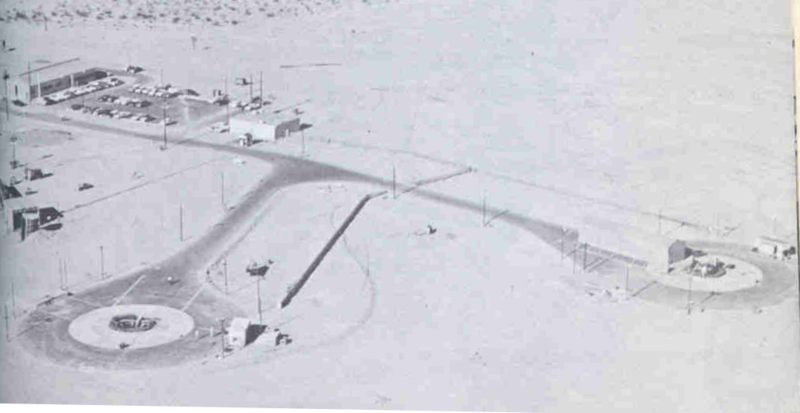
If you have a minute or two to spare I'm going on a silo tour starting with missiles at Edwards Air Force Base:


Minute man silos (by Craftsman 2001)

In England I had a pick of thousands of silos from farms across the country before settling on these with a brickwork base. They look older that those in made of concrete or steel.

Farm silos at Critchells Green (by David Martin - CC ASA 2.0 license)

In Germany I discovered a factory at Erfurt which makes feed for cattle, pigs and chickens. The picture dates from 1977 when they made 2000 tons more of the stuff than in 1976.

(From Bundes arkiv, Bild 183-50713 0024 CC-BY-SA)

My first project as a graduate trainee in the steel industry in the UK was to make up trial sinter mixes for the blast furnaces at Redbourne Works in Scunthorpe. We did it the hard way with a shovel!

When I found this picture  of the charging hoppers (silos de chargement) for a blast furnace in France it just had to be included.

(CC-ASA-2.0 license)

How many of you remember the Gregorian Chant sung in by monks from the monastery of Santa Domingo de Silos. They made the UK charts in the 1990s. The monastery is located in Northern Spain. 

I could have picked many images from there but settled for one from their laboratories, If you use your imagination you can scale up the vessels to 'silo' size and anyway it's the nearest I could get to a sepia colour.


Finally to Norway where I worked on the early stages of the project to build the Troll A gas platform. 

(My photo)

This tilting concrete tower in JÃ¥ttÃ¥vÃ¥gen is 60m tall  at Hinna,  in Stavanger. The tower which is tilting 16 degrees towards the ocean was originally built in 1984 for experimental tests before they started on the Troll-Platforms in the later 1980s and 1990s.

Troll A platform (by Swinston101 - GNO Free documentation license)

Troll-A Platform at 472m tall, was the tallest and heaviest construction ever moved by man). The legs of the platform go down over 300 metres; 100 meters at the bottom are tilted like the tower in the previous picture.

You will find more silos at Sepia Saturday

Tuesday, 4 January 2011

Sepia Saturday's Christmas Box

It may be strange to start a story about a Christmas box at the beginning of a new year. After New Year's Day on Saturday and a Bank Holiday yesterday it was time for the Christmas tree and decorations to be taken down.

That's where our Christmas box comes into its own. It's held together by parcel tape and has no lid. Carrs Water Biscuits is the name on the side. The decorations and lights from the tree are kept in the box until Christmas comes round again.

There was some debris in the bottom of the box to be emptied before it could be filled. It was then that the old discoloured newspaper lining the box caught my eye.


The paper was so fragile that it could not be straightened out. The date had faded but this is what it said:


The Scunthorpe Evening Telegraph that day contained a column "Roma's Mid-Week Notes" with the main heading "New Year - But men will still hate women drivers."


Our three children were born in Scunthorpe; the photo below is of Andrew  and Adrian in early 1964 - the year of the newspaper in our Christmas box.


Even then Britain was importing American ideas as shown by another of Roma's Notes:


I wonder what happened to the kooky rings.

Happy New Year to all at Sepia Saturday (where you will find more Sepia memories )