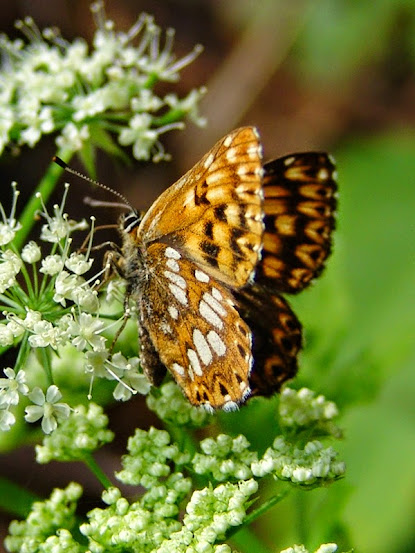
My theme this year is wild flowers. Most of us will be aware of the flowers that grow in our gardens but what surprises me is how few wild flowers that I know.
I pass them every day but rarely look at them. Well this year will be different - even if many of them may fall under the letter 'X' for unknown.
'C' - Cowslips, Cow Parsley, Cranesbill
Yesterday I included buttercups under letter 'B' and mentioned the Irish tradition of rubbing them on cows' udders.
That's an oblique link to these flowers.
Now you might wonder what my next shot has to do with wild flowers. You have to think laterally again.

And here's the flower.

I pass them every day but rarely look at them. Well this year will be different - even if many of them may fall under the letter 'X' for unknown.
'C' - Cowslips, Cow Parsley, Cranesbill
Yesterday I included buttercups under letter 'B' and mentioned the Irish tradition of rubbing them on cows' udders.
That's an oblique link to these flowers.
 |
| Cowslips |
The cowslip's name is a polite form of cowslop or cowpat, the animal's droppings in scattered clumps on pastureland. Once an established flower on grassland it has become more rare as meadows have been ploughed up.
Those in my photo were seen last year on a grassy bank in North Yorkshire.
Roadside verges often contain other 'cow' related flowers.
 |
| Buttercups and cow parsley |
 |
| Cow parsley |
I may regret including this under 'C' as it is also known as Queen Anne's Lace.
It was common practice when I was young to make peashooters of its thick stems. I was never clever enough to use them to make whistles.
Unfortunately it may be mistaken for similar looking, but poisonous, relatives such as hemlock and fool's parsley and has as a consequence sometimes been called Devil's meat.
 |
| Sandhill cranes in Michigan |
Here's a hint.


 |
| Cranesbill |
This plant in a local hedgerow is, in effect, a form of wild geranium.
I need to identify it further from the shape of its petals and its leaves (which you can't see here.)
Varieties include, bloody, cut-leaved, hedgerow, meadow, round-leaved, shining and wood cranesbill. I shall have to look more closely at it this year.